

Email marketing remains one of the most effective channels for driving engagement, nurturing leads, and securing sales. However, the success of any campaign is primarily determined by deliverability—the percentage of emails that successfully reach a recipient’s inbox rather than being filtered into spam. At the heart of this challenge lies your sender identity, which is defined by the IP address used by email marketing services to send your messages. This is where the concept of a dedicated IP for email marketing becomes crucial.
In the case of many businesses, ESPs offer a shared IP address, which is cost-effective but contains certain risks. This shared environment means that every other user on that same address will affect your sender reputation. The moment one bad neighbor starts sending spam or gets blocked, your campaigns suffer. This is where the strategic choice of a dedicated IP for email marketing comes into play. A dedicated IP address gives you full control over your sending reputation and provides a reliable foundation for consistent, high-volume campaigns, offering a clear path to becoming a trusted sender.
What is a Dedicated IP in Email Marketing?
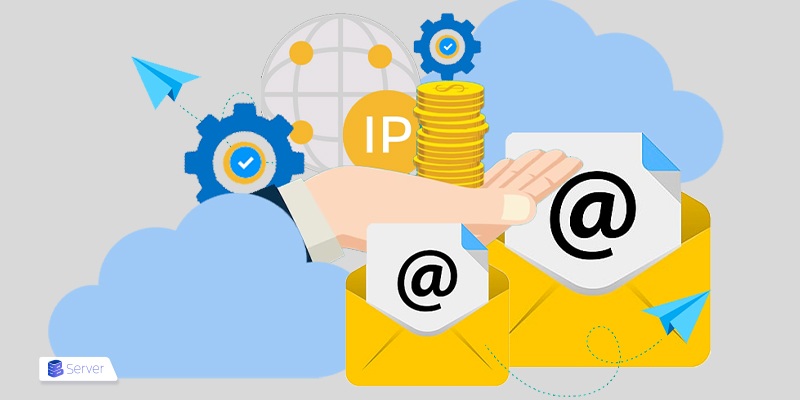
Every email is sent from an IP address, which is a distinctive numerical label assigned to a sender of data over a network. It’s the virtual return address used by ISPs like Gmail, Yahoo, and Outlook to determine your location and whether they can trust you.
Mainly, there exist two models for setting up an email marketing server:
- Shared IP Address: This is, and will likely remain, the most common and often default option, especially for new or low-volume senders. Multiple companies or users actually use the same IP address to send their emails. The plus side is the lower cost and shared reputation management by the ESP. A major drawback is the harmful neighbor effect: poor sending practices by one user can damage the shared IP’s reputation and negatively affect deliverability for everyone else using it, even if your lists are impeccable.
- Dedicated IP Address: With this dedicated IP email marketing solution, a unique IP address will be assigned to your account only. You and you alone can build and maintain your sender reputation. In effect, isolation of this kind reduces the risk from other senders’ activities, resulting in predictable and stable email deliverability.
When Should You Buy Dedicated IP for Email Marketing?
For many growing businesses, deciding to purchase a private mailing address is a pivotal moment. While a shared IP will suffice for low volume or intermittent sending, when your email campaign volume and reputation become mission-critical, it’s time to shift to a dedicated IP server.
You should seriously consider moving to a dedicated IP if you meet one or more of the following criteria:
- High Sending Volume: If you regularly send large volumes of emails — such as 50,000 to 100,000 per month — a dedicated IP becomes essential. At this scale, maintaining a consistent sending pattern is crucial. Using a shared IP can lead to inconsistencies or throttling, which may hinder your ability to scale effectively.
- Full Reputation Control: If your email program is a key driver of revenue, and you cannot afford to take the risk of being impacted by other senders, then a dedicated IP provides full control. Your deliverability is solely indicative of your own list quality, engagement metrics, and content.
- Consistent Sending Frequency: A dedicated IP requires sending consistently regularly to establish and maintain a good reputation with ISPs. If your business model involves predictable weekly or daily campaigns, this consistency is easier to manage on a dedicated IP.
- Specific Customization Needs: Advanced configurations, such as allowing the listing of your IP for corporate inboxes or highly customized authentication protocols, SPF, DKIM, DMARC, for instance, are better handled on a dedicated IP.
Advantages of Dedicated IP for Email Marketing
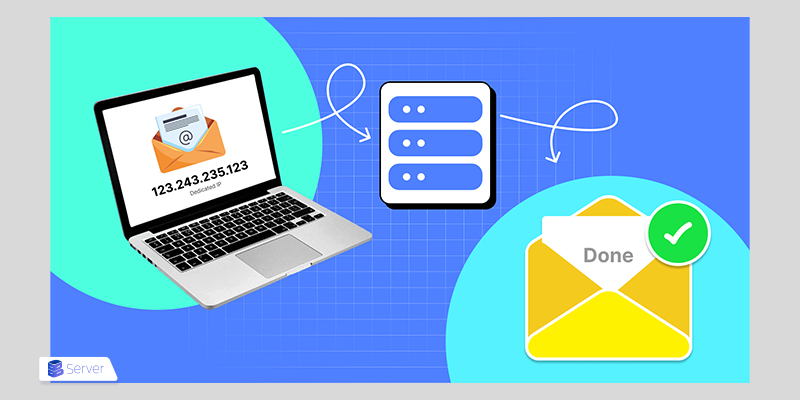
The best dedicated IP for email marketing brings several tangible benefits, which positively affect your campaign ROI:
- Maximized Deliverability: Since your reputation is isolated, every positive metric you achieve, like high open rates, low spam complaints, and few bounces, directly contributes to a higher trust score for your specific IP. ISPs always work toward delivering first from those IPs that have consistently good reputations.
- Greater Control and Predictability: With the aid of a dedicated IP address marketing tool, there is increased control and predictability, leading to a more stable sending environment. You retain complete control over the rate and volume at which your messages are sent. This is crucial for IP warming, a necessary process for building up your IP’s reputation. This level of control is a non-negotiable factor for serious email strategists.
- Avoid the Bad Neighbor Effect: You are entirely insulated from others’ irresponsible actions. You will not suddenly see a drop in deliverability because another user on the shared IP decided to send out a mass, unsegmented campaign to a low-quality list.
- Easier Issue Diagnosis: If you do happen to have a deliverability issue, a dedicated IP makes troubleshooting easier. The problem can be attributed to either your account, your sending practices, or the quality of your list, rather than a multi-user environment.
Essential Steps After Acquiring a Dedicated IP
Owning your own dedicated IP server is just the beginning. Fully tapping into its power requires a very deliberate process for progressively building your IP’s reputation and credibility, in concert with ongoing management.
- IP Warming: A brand-new dedicated IP address doesn’t have any reputation. If you send a large number of emails immediately, ISPs will consider this suspicious and unsolicited volume and treat you as a spammer. Start with small batches of emails, such as 1,000 to 2,000 per day, targeting your most engaged subscribers. Gradually increase the volume and frequency over several weeks. This slow, deliberate process creates a track record of healthy sending.
- Authentication Setup: Ensure that all your email authentication records, including Sender Policy Framework SPF, DomainKeys Identified Mail DKIM, and Domain-based Message Authentication Reporting and Conformance DMARC, are correctly set up. These verify your identity and aren’t optional if you want to gain trust.
- List Quality: The single most significant factor in your IP’s long-term reputation is your subscriber list. Make it a habit to clean your lists regularly to remove inactive users, hard bounces, and spam traps. Never buy email lists, and always employ a double opt-in process.
- Continuous Monitoring: Keep a regular track of the KPIs such as open rates, click-through rates, bounce rates, and, above all, spam complaint rates. If your complaint rate exceeds 0.1%, you should make immediate changes to your sending practices.
This offers businesses more flexibility and greater control over their entire sending environment than what is possible from a standard ESP. Some businesses could opt for a private email marketing server hosted on something such as a VPS. Using a high-performance UAE VPS or a similar solution will provide full administrative control, but it also means taking full responsibility for the setup, maintenance, and reputation management.
Conclusion
The decision to invest in a dedicated IP address for email marketing is a strategic move that distinguishes casual senders from professional marketers. It is an investment in control, consistency, and ultimately, your long-term sender reputation. Committing to responsible sending practices and thoroughly managing the IP warming process secures you a reliable path into your subscribers’ inboxes. Being able to manage one’s own destiny within the IP address marketing space is a decided advantage. We encourage you to closely follow the recommendations above to ensure that the advantage is well utilized.
FAQ
1. Is a dedicated IP necessary for small businesses or low-volume senders?
Generally, no. If your business sends fewer than 50,000 emails per month, or is just starting to send emails, a shared IP address managed by a reputable ESP will suffice and prove to be way more cost-effective. The ESP manages the overall reputation, but the volume is too low to build a strong, dedicated IP reputation quickly.
2. How long does it take to warm up a new dedicated IP?
The process of IP warming usually takes about 30-60 days. Actual time depends on the size of your list and the consistency in your sending schedule. It is primarily achieved by increasing the volume of emails sent daily, starting with the most engaged subscribers, to establish a positive and trustworthy reputation with ISPs.
3. Can a dedicated IP address get blocked?
Yes. Since reputation is closely tied to your sending behavior on a dedicated IP address, poor list quality, sudden changes in sending volume, or high spam complaint rates can cause this dedicated IP address to become blocked. The added benefit of this is that you can pinpoint the issue directly and immediately correct your practices, rather than relying on a shared environment.